Kering SRE

Kering is a French multinational holding company specializing in luxury goods, headquartered in Paris. It owns the brands Yves Saint Laurent, Gucci, Balenciaga, Bottega Veneta, Creed and Alexander McQueen.

The Kering SRE team focuses on ensuring the reliability, scalability, and performance of Kering’s digital platforms and services. They typically work on automating processes, monitoring system health, and implementing best practices in software engineering and operations.

Customer Challenge

Kering’s SRE team values Well-Architected Reviews as a crucial tool for maintaining a secure, scalable, and efficient cloud infrastructure. These reviews help identify and mitigate risks, optimize costs, enhance scalability, and ensure alignment with AWS best practices. By fostering continuous improvement and providing actionable insights, the reviews enable informed decision-making and support a robust, future-proof architecture that aligns with Kering’s business objectives.

The team faces challenges in creating custom lenses for a Well-Architected Review (WAR) tailored to their specific needs. The primary difficulty is defining the scope and objectives of the lens to focus on critical priorities like reliability, operational excellence, or cost optimization while ensuring it remains relevant for other teams across the organization. Balancing specificity with general applicability is essential but complex.

Technically, integrating the custom lens into existing workflows is challenging. The SRE team needs to build or adapt tools to support automated assessments and ensure compatibility with cloud-native and third-party systems. Collecting reliable data and defining metrics that reflect the organization’s unique needs adds further complexity.

Collaboration and alignment across teams present additional obstacles. Securing cross-team buy-in requires clear communication of the custom lens’s purpose and benefits, particularly for teams less familiar with the Well-Architected Framework. Resistance to change or skepticism about new processes may hinder adoption.

Sharing standardized guidelines and best practices across diverse teams is difficult. Ensuring consistent adherence while maintaining flexibility for team-specific adaptations demands strong change management and stakeholder engagement. Promoting a culture of continuous improvement is crucial for the success of this initiative.

Customer Challenge

Move2Cloud Solution Approach

The challenge is creating a tailored framework that balances technical precision with organizational adoption. Move2Cloud offers a structured solution combining technical customization, stakeholder engagement, and ongoing support for an effective WAR process:

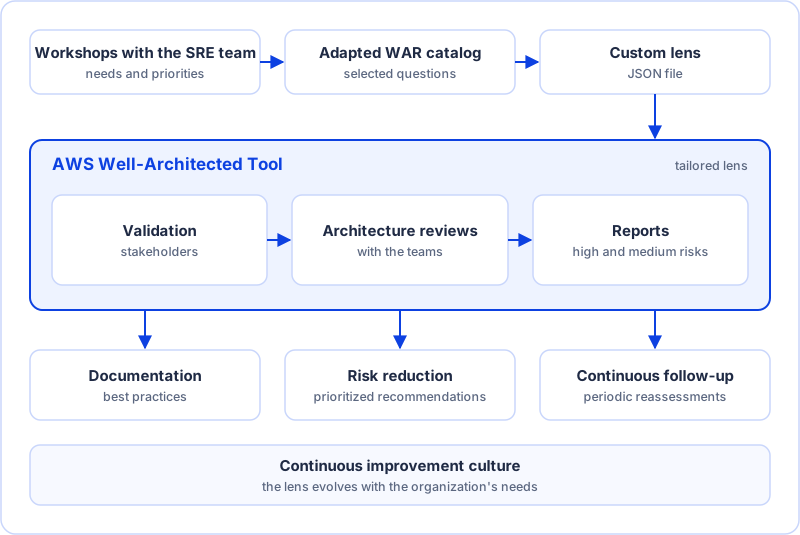
Move2Cloud Solution Approach
Engaging with Clients: Move2Cloud starts by deeply engaging with Kering’s stakeholders to understand their unique business requirements, operational priorities, and current IT infrastructure. This phase involves assessing the specific needs of the SRE team, identifying the key architectural goals (e.g., reliability, cost optimization), and understanding the broader organizational objectives that the custom lens must align with.
WAR Catalog Customization: Based on the insights from the initial engagement, Move2Cloud selects the most suitable questions and answers from the Well-Architected Review (WAR) catalog. These are tailored to reflect Kering’s operational context, ensuring relevance to their cloud environments and aligning with SRE priorities. This customization helps create a targeted framework for assessing architecture performance and risks.
Developing the JSON File for Custom Lenses: Move2Cloud then develops the custom lens in JSON format, incorporating the selected and customized WAR questions and best practices. This JSON file serves as the foundation for Kering’s tailored lens, enabling structured reviews that focus on their specific needs.
Writing Best Practices and Documentation: To enrich Kering’s helpful resources and improvement materials, Move2Cloud develops comprehensive documentation and best practices. These resources provide specific context to Kering’s environment, ensuring that teams across the organization have actionable and relevant guidance. The documentation includes detailed explanations, real-world examples, and step-by-step instructions to help teams implement improvements effectively.
Stakeholder Validation: The custom lens is presented to Kering’s stakeholders for validation. This step ensures that the lens aligns with their expectations, addresses their unique challenges, and is practical for real-world use. Feedback from stakeholders is integrated to refine the lens before deployment.
Review Meetings: Once the lens is finalized, Move2Cloud facilitates review meetings with relevant teams across Kering. These sessions focus on assessing existing cloud architectures using the custom lens, identifying strengths, and uncovering high-risk and medium-risk areas. Move2Cloud provides structured guidance during these reviews to ensure consistency and clarity.
Reporting and Risk Mitigation Focus: Reports are generated from the reviews, summarizing findings and highlighting high-risk and medium-risk areas. Move2Cloud works with Kering teams to prioritize these risks, offering actionable recommendations to address the identified issues effectively. This helps the teams focus on critical improvements that drive tangible benefits.
Continuous Updates and Follow-Ups: Finally, Move2Cloud ensures the process remains dynamic by following up with periodic updates and reassessments. They monitor the progress of risk mitigation efforts, ensure the custom lens evolves with Kering’s changing needs, and help embed a culture of continuous improvement in architectural practices.
Move2Cloud Solution Approach

Conclusion

The Move2Cloud approach successfully balanced technical rigor with cross-team collaboration, laying the foundation for a continuous improvement process embedded in Kering's culture. This tailored framework ensures that every architectural decision supports the company’s strategic objectives while reducing risks and enhancing operational efficiency.

À propos de nousNous contacter

Go further

AWS Well-Architected Framework: The 6 Pillars Applied in PracticeCloud

AWS Well-Architected Framework: The 6 Pillars Applied in Practice

The AWS Well-Architected Framework is more than a checklist — it is a methodology for building cloud systems that are secure, reliable, and cost-efficient from day one.

FinOps on AWS: Reduce Your Cloud Costs by 40% with These StrategiesCloud

FinOps on AWS: Reduce Your Cloud Costs by 40% with These Strategies

Our clients regularly achieve 30–40% cost reductions without sacrificing performance. Here are the concrete strategies we apply in our FinOps engagements.

AWS EKS Auto Mode: Simplifying Kubernetes Management in ProductionCloud

AWS EKS Auto Mode: Simplifying Kubernetes Management in Production

EKS Auto Mode, launched in late 2024, fully delegates node group management, networking and storage to AWS. Here is what that changes for DevOps teams.